Civitavecchia to Rome by Train + Self-Guided Walking Tour
Some links in this post are affiliate links. If you book through them, I may earn a small commission at no extra cost to you. Thanks for supporting my work!
As an Amazon Associate, I earn from qualifying purchases. Read my full disclosure here.
Visiting Rome in one day from a cruise ship may sound ambitious, but it is possible if you plan your time well.
I’ve done Rome from Civitavecchia myself on a cruise day.
I took the train into the city, explored the main landmarks on foot, and returned to the ship on time.
This guide covers how to get from Civitavecchia to Rome, which train station to use, and how to follow a simple self-guided walking route if you only have a few hours in the city.
If you want details on docking, getting around, and what to do in Rome in general, check out my full Civitavecchia Cruise Port guide.
How to Get from Civitavecchia to Rome
Civitavecchia cruise port is about 80 km from Rome.

The easiest way to visit Rome on your own is by train.
You can also book a cruise transfer, private transfer, or guided excursion, but the train gives you the best mix of price and flexibility.
Civitavecchia to Rome by Train
The train is usually the cheapest and a practical way to get from Civitavecchia to Rome.
First, you need to get from the cruise ship to Civitavecchia train station.
The port is large, so I don’t recommend walking from the ship.
The easiest options are:
- Civitavecchia Port Link shuttle — runs between the port and the train station (around €6 one way when I visited)
- Taxi — quick and useful if you are sharing with others (I paid about €10 per person)
- Free port shuttle to Largo della Pace — then walk or take a local bus to the station, but this takes longer

When I visited, I took a taxi to save time.
Trains from Civitavecchia to Rome run frequently and usually take around 45 minutes to 1 hour 20 minutes, depending on the service and station.
Useful Rome train stops:
- Roma San Pietro — best for St. Peter’s Basilica and the Vatican
- Roma Ostiense — useful for the Colosseum area
- Roma Termini — Rome’s main train station
- Roma Trastevere — good for Trastevere and some central areas
For my route, I started near the Colosseum and finished near St. Peter’s Basilica, then returned from Roma San Pietro station.
💡 Cruise Tip: Plan Your Return Train
- Allow buffer time for delays
- Check return trains before you start
- Leave early — be back ~2 hours before all-aboard
Other Ways to Get from Civitavecchia to Rome
- Private transfer — easiest, door-to-door (€150–200+), best for groups
- Cruise excursions — safest option, the ship will wait, but more expensive
- Shuttle buses — limited schedules, less flexible than trains
If you want to go inside the Colosseum, Vatican Museums, or St. Peter’s Basilica, a guided excursion can also help you use your time better.
👉 You can also compare tours on Viator and GetYourGuide — both offer reliable options for cruise passengers, often at better prices and with flexible cancellation.
Can You See Rome in One Day from Civitavecchia?
Yes — you can see the main highlights, but keep expectations realistic.
You won’t have time to go inside everything, and lines can be long.
On my cruise day, I had about 4 hours in Rome.
I focused on outdoor landmarks and walked from the Colosseum to St. Peter’s Basilica.
It was fast-paced, but worth it.

My Self-Guided Rome Walking Route
My route covered around 5 km from the Colosseum to St. Peter’s Basilica.
This route is best if you want to see the main landmarks from outside and enjoy Rome on foot.
Stop 1: Colosseum and Roman Forum
Start at the Colosseum.

If you arrive at Roma Termini, take Metro Line B (2 stops) to Colosseo station, or walk about 25 minutes to the Colosseum.
I only saw the Colosseum from the outside because I didn’t have enough time to go in.
Even from the square, it is impressive and worth the stop.
From here, walk along Via dei Fori Imperiali.
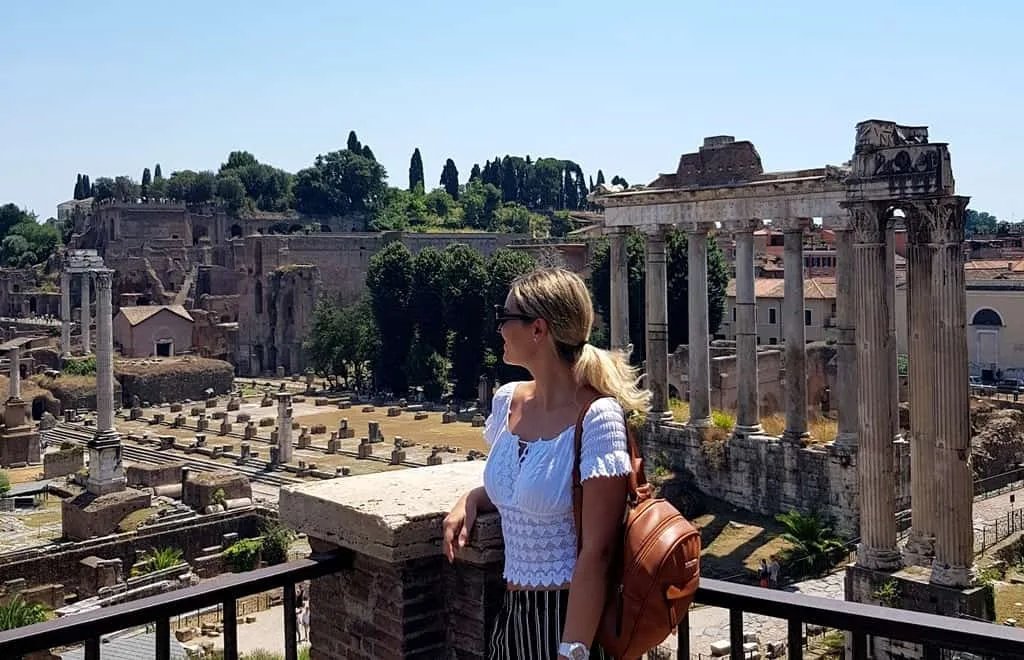
You’ll pass the Roman Forum, once the center of political and social life in ancient Rome.

If you want to visit inside the Colosseum or Roman Forum, book tickets in advance and allow at least 2 hours.
Stop 2: Capitoline Hill
From the Roman Forum area, continue toward Capitoline Hill.
Campidoglio Square on Capitoline Hill was designed by Michelangelo and offers one of the best views over the Roman Forum.


It’s a short uphill walk and a great place for photos.
This is a quick stop, but I think it’s worth including.
Stop 3: Piazza Venezia and Via del Corso
From Capitoline Hill, walk down to Piazza Venezia.
Here you’ll see the large white Vittoriano monument, one of Rome’s most recognizable landmarks.


From Piazza Venezia, continue toward Via del Corso, one of the main shopping streets in Rome.
This is a useful area if you want a quick coffee, gelato, or short shopping break.
Stop 4: Trevi Fountain
Take a short detour from Via del Corso to the Trevi Fountain.
It is usually crowded, but it’s still one of the must-see landmarks in Rome.

I recommend keeping this stop short if you’re on a cruise schedule.
Take your photos, toss a coin if you want to follow the tradition, and continue toward the Pantheon.

Stop 5: Pantheon
The Pantheon is about a 10-minute walk from the Trevi Fountain.
It is one of the best-preserved ancient buildings in Rome and now operates as a church.


Entry requires a ticket—book ahead if you plan to go inside.
If your time is limited, seeing it from the outside is still worthwhile.
Stop 6: Piazza Navona
From the Pantheon, walk to Piazza Navona.
This is one of Rome’s most beautiful squares, with fountains, cafés, and street artists.


It’s a good place for a short break if you have time.
Keep in mind that restaurants and cafés in the main tourist squares can be expensive.
Stop 7: Castel Sant’Angelo
From Piazza Navona, walk toward Castel Sant’Angelo.
This fortress sits near the Tiber River and is close to the Vatican.

I’ve always loved this area, especially because I’m a fan of Dan Brown’s novels, so I took a little more time here for photos.
Stop 8: St. Peter’s Basilica and St. Peter’s Square
From Castel Sant’Angelo, it’s about a 10-minute walk to St. Peter’s Square.
This was my final stop before returning to Civitavecchia.
The square is impressive even if you don’t go inside the basilica.

St. Peter’s Basilica is free to enter, but security lines can be long.


If you only have a few hours in Rome, check the line first before deciding.
🎟️ Tip: Visiting the Vatican Museums
The Vatican Museums are right next to St. Peter’s Basilica, but a visit usually takes 2–3 hours or more.
If you want to include them, it’s best to book tickets or a guided tour in advance to avoid long lines and save time.
Returning from Rome to Civitavecchia
After visiting St. Peter’s Square, I walked to Roma San Pietro train station, which took around 15 minutes.
From there, I took a regional train back to Civitavecchia.
For this walking route, Roma San Pietro is a very convenient station for the return trip.
Is It Better to Visit Rome on Your Own or Book a Tour?
If you’re comfortable with trains and walking, visiting Rome on your own from Civitavecchia is cheaper and more flexible.
For less stress or access to major attractions, a guided tour or cruise excursion is a better option.
I did it independently and enjoyed the flexibility, but it’s a fast-paced day and best if you’re comfortable walking and managing your time.
Is Rome Worth Visiting on a Cruise Stop?
Yes — Rome is absolutely worth visiting from Civitavecchia cruise port, even though it’s about 80 km away.
With an early start and a simple plan, you can see major highlights like the Colosseum, Trevi Fountain, and Vatican in one day.
It’s a busy day, but very doable and well worth the effort.
Final Tips for Visiting Rome from Civitavecchia Cruise Port
Rome from Civitavecchia takes planning, but it works well if you start early and stick to a clear route.
Leave enough time to get back to the port without rushing.
For more details and planning, check the resources below.
- Civitavecchia Cruise Port Guide — port info, transport, and tips before heading to Rome
- My YouTube video: Civitavecchia to Rome day trip + Rome highlights covered in this walking route
- Trenitalia — check train schedules and buy tickets
Planning more cruises? You can browse all my regional cruise port guides here: Mediterranean • Caribbean • Northern Europe • USA & Canada • Australia & New Zealand • Middle East