

Vigo Cruise Port Guide (Spain)
Some links in this post are affiliate links. If you book through them, I may earn a small commission at no extra cost to you. Thanks for supporting my work!
As an Amazon Associate, I earn from qualifying purchases. Read my full disclosure here.
Vigo cruise port sits on Spain’s Atlantic coast in Galicia, a region known for fresh seafood, Albariño wines, and its compact historic center.
Ships dock right in the city, with the old town about a 5–10 minute walk from the terminal.
I’ve visited Vigo several times on a cruise, explored the old town on foot, and once took a day trip to the nearby wine region.
In this Vigo cruise port guide, I’ll walk you through what the port is like, how to get around, and what you can realistically do during your stop.
Where Cruise Ships Dock in Vigo
Cruise ships dock at Muelle de Transatlánticos, right in the center of Vigo. There is no tendering.

The terminal is modern but simple, with basic facilities such as toilets, security screening, and a small souvenir area.
A tourist information office is located near the terminal exit.
Once you step out, you’re already on the waterfront promenade.
The marina is directly in front of you, and the A Laxe shopping center is a short walk away if you need Wi-Fi or a quick stop.
The old town is about a 5–10 minute walk from the port. It’s easy to reach, but the final section is uphill as you move away from the waterfront.
Can You Explore Vigo on Your Own?
Yes — Vigo cruise port is easy to explore on your own.
The ship docks right in the city, and the main areas are within walking distance.
You don’t need transport to visit the waterfront or the old town.
The only thing to keep in mind is the uphill walk toward the historic center.
Exploring independently works best if you stay in Vigo.
For places outside the city, like wineries or Santiago de Compostela, a tour is the better option.
Getting Around from the Port
Vigo cruise terminal is compact and easy to navigate.
It takes only a few minutes to exit, and there is step-free access for wheelchair users.
Walking
Walking is the main way to get around.
The port area is flat, but the old town sits uphill.
If you want to avoid the incline, you can go through the A Laxe shopping center and use the elevator to reach the upper level, which connects closer to the historic area.
Taxis
Taxis are available right outside the port.
They are useful if you want to skip the uphill walk or travel further outside the city.
A short ride to the old town is inexpensive.
Ferries
The ferry terminal is about a 2-minute walk from the cruise port.
From here, ferries run to Cangas and the Cíes Islands, part of the Atlantic Islands National Park known for beaches and protected nature areas.
Availability can vary, and tickets are limited.
Trains
Vigo has two train stations:
- Vigo-Guixar (closer, regional trains)
- Vigo-Urzáiz (high-speed connections)
Both are a short taxi ride from the port. Trains are mainly useful if you plan to travel beyond Vigo independently.
You can check timetables at Renfe’s official site
Shore Excursions from Vigo
If you’re planning to visit wineries or Santiago de Compostela, guided tours are the easiest option and avoid transport logistics.
👉 Browse shore excursions on Viator or GetYourGuide — reliable platforms widely used by cruisers
🛳️ Planning more Mediterranean ports?
My Mediterranean Cruise Port Guide eBook covers 45 ports with practical tips on getting around, walking routes, shore excursions, and what you can see and do during a cruise stop.
👉 Get the guide here


How Much Time You Need in Vigo
Short stop (4–5 hours)
You can walk the old town and waterfront without rushing.
Typical stop (6–8 hours)
This gives you enough time to explore Vigo or take a half-day winery tour.
Long stop (8+ hours)
You can plan a full-day excursion, such as Santiago de Compostela, or combine a tour with time in the city.
What to Do in Vigo Cruise Port
If it’s your first visit, these are the top things to do in Vigo from a cruise ship, with most cruisers choosing between exploring the town or taking a short trip outside the city.
Explore Vigo Old Town on Foot (Casco Vello)
If you don’t book a tour, this is what most cruise visitors do.
Casco Vello is Vigo’s historic center, developed around its old fishing port.

Today, it’s a compact area of stone streets, small squares, and local shops.
This area includes:
- Mercado da Pedra — known for oysters and small local stalls
- Concatedral of Santa María — a 19th-century church near the waterfront
- Plaza de la Constitución — the main square

From the port, it’s about a 10-minute walk, with a gradual uphill section.
Allow 1.5–2 hours at a relaxed pace.
👉 Browse Vigo walking tours and activities
Visit an Albariño Winery in Rías Baixas
This is the main excursion option from Vigo.
The Rías Baixas region is known for Albariño, a crisp white wine grown along the Atlantic coast.
I visited Bodegas Granbazán on one of my stops, and it was a great way to experience the region beyond the city.


Most tours take around 3 to 5 hours and include transport and guided tastings.
👉 See winery tours and tastings from Vigo
Take a Day Trip to Santiago de Compostela
Santiago de Compostela is one of Spain’s most important historic cities and the final stop of the Camino de Santiago.
It’s known for its cathedral and UNESCO-listed old town, where you can explore historic squares, walk through narrow stone streets, and visit landmarks like the Cathedral of Santiago, believed to hold the remains of St. James.

Plan for about 1.5 hours each way, so this is a full-day tour.
Guided tours are the easiest option and help avoid transport logistics.
👉 Check Santiago de Compostela guided tours from Vigo
Walk the Waterfront and City Center
The waterfront area is right next to the cruise port and is the easiest place to explore without any planning.
This part of Vigo includes the marina, open promenades, and the A Laxe shopping center.
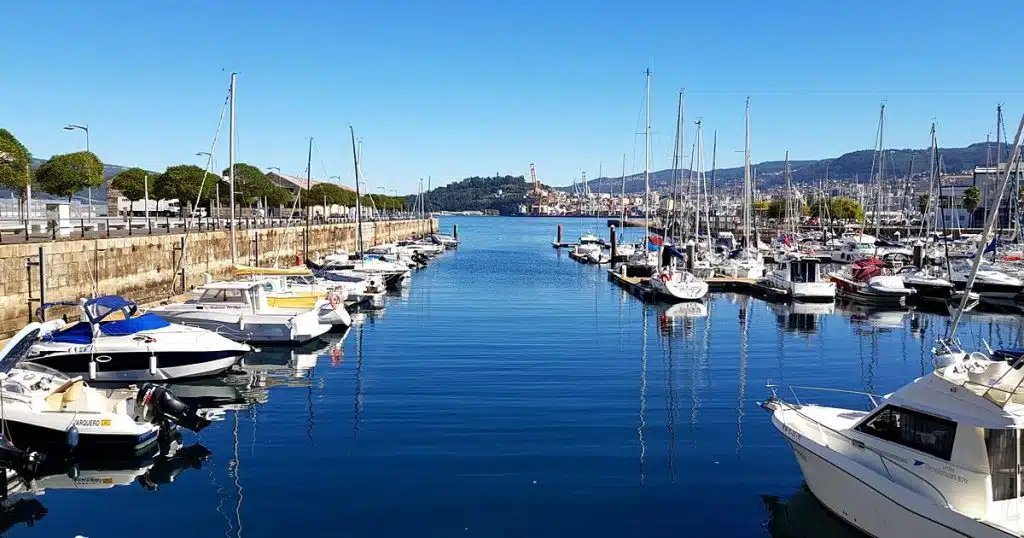
From here, you can also walk to Rúa do Príncipe, the city’s main pedestrian shopping street with local shops, cafés, and everyday services.
It’s flat, easy to navigate, and works well if you prefer a relaxed day close to the ship or have limited time.
Allow about 1–2 hours at a comfortable pace.
👉 Explore Vigo sightseeing tours and activities
Visit Samil Beach, Castro Fortress, or Nearby Towns
If you have more time or want to go beyond the city center, there are a few easy options around Vigo.
Praia de Samil is the main beach, located about 15 minutes by taxi, known for its long sandy stretch and views of the Cíes Islands.
Castelo do Castro is a hilltop park built around a historic fortress, offering panoramic views over the city and bay, but it requires an uphill walk.
For a short trip, Baiona and Pontevedra are both about 30–40 minutes away and offer a different setting, from coastal scenery to compact historic centers.


These options work best on longer port days or in good weather.
Should You Book a Shore Excursion in Vigo?
You don’t need a shore excursion if you plan to stay in Vigo, as the old town and waterfront are easy to explore on your own.
However, if you want to go beyond the city — for example, to the Rías Baixas wine region or Santiago de Compostela — a tour is the easier and more reliable option, especially given the travel time involved.
Excursions also reduce the risk of delays when returning to the ship, which can matter on longer port days.
Practical Tips for Cruise Visitors
- The local currency is the euro (€), and credit cards are widely accepted throughout Vigo.
- Wear comfortable shoes, as the streets in the old town are cobbled and include uphill sections.
- Vigo is considered safe, but keep an eye on your belongings in busy areas.
- The weather can change quickly due to the Atlantic climate, so it’s a good idea to bring a light jacket.
- If you plan to visit wineries or nearby towns, book transport or tours in advance to save time.
- For shopping, head to Rúa do Príncipe for main stores and local boutiques, or visit A Laxe shopping center near the port for a quick stop.
Is It Worth Staying in Vigo?
Yes — staying in Vigo works well for a relaxed cruise port day.
The city is compact and walkable, with the old town and waterfront close to the port, so you can explore without transport.
However, Vigo is not a major sightseeing destination.
If you want a more memorable experience, visiting the Rías Baixas wine region or taking a day trip to Santiago de Compostela is the better choice.
Vigo Cruise Port FAQ
❓ Is Vigo cruise port walkable?
Yes, Vigo cruise port is fully walkable. Ships dock in the city center, and the old town and waterfront are within a 5–10 minute walk from the terminal.
❓ Do you need to tender in Vigo cruise port?
No, cruise ships dock directly at Muelle de Transatlánticos, so there is no tendering required.
❓ How far is Vigo old town from the cruise port?
Vigo old town is about a 5–10 minute walk from the cruise port. The route is straightforward, but the final section is slightly uphill.
❓ What is Vigo known for?
Vigo is known for its seafood, especially oysters, its Albariño wine from the nearby Rías Baixas region, and its working port atmosphere.
❓ Is Vigo worth visiting on a cruise?
Yes, Vigo is worth visiting for an easy and walkable port day, but many cruisers use it as a base to visit wineries or Santiago de Compostela.
❓ Can you visit a winery from Vigo cruise port?
Yes, you can visit wineries in the Rías Baixas region on a half-day tour, which typically includes transport and wine tasting.
❓ How much time do you need in Vigo cruise port?
You need about 3–5 hours to explore Vigo. Allow more time if you plan a tour outside the city.
Helpful Resources
- Vigo tourist information — maps, local attractions, and ferry information
- Vigo port information — terminal details, ship schedules, and port services
- Galicia tourism website — regional highlights, wineries, and nearby destinations
- Renfe train schedules — routes and timetables if traveling beyond Vigo independently
Ports Often Included with Vigo
Vigo is typically included on Iberian Peninsula and Atlantic cruise itineraries, often combined with ports in Spain, Portugal, and the Canary Islands.
- Lisbon — a major embarkation port known for historic neighborhoods, viewpoints, and tram routes
- La Coruna — another Galician port known for coastal scenery and the Tower of Hercules
- Bilbao — known for the Guggenheim Museum and modern architecture
- Santa Cruz de Tenerife — a key Canary Islands port known for year-round warm weather and access to Mount Teide
- Southampton — known as a major cruise hub and gateway to London
- Cadiz — a historic Andalusian port known for its historic old town and seaside setting
- Funchal — a scenic Atlantic island stop known for lush landscapes, botanical gardens, and scenic viewpoints
Planning more cruises? You can browse all my regional cruise port guides here: Mediterranean • Caribbean • Northern Europe • USA & Canada • Australia & New Zealand • Middle East