


Barcelona Cruise Port Guide (Spain)
Some links in this post are affiliate links. If you book through them, I may earn a small commission at no extra cost to you. Thanks for supporting my work!
As an Amazon Associate, I earn from qualifying purchases. Read my full disclosure here.
Barcelona is one of the busiest cruise ports in the Mediterranean, serving both as a port of call and an embarkation port.
I’ve visited several times on cruises and once stayed two days before sailing, which gave me a more relaxed view of the city.
If you’re staying longer, see my Barcelona 1–2 day itinerary for how to plan your time.
The cruise terminals sit just south of the historic center, and while close, most require a short ride to reach the main sights.
In this Barcelona cruise port guide, I’ll cover where ships dock, how to get into the city, and what you can realistically see on a cruise stop.
Where Cruise Ships Dock in Barcelona
Barcelona is one of Europe’s busiest cruise ports and a major hub for Mediterranean itineraries.
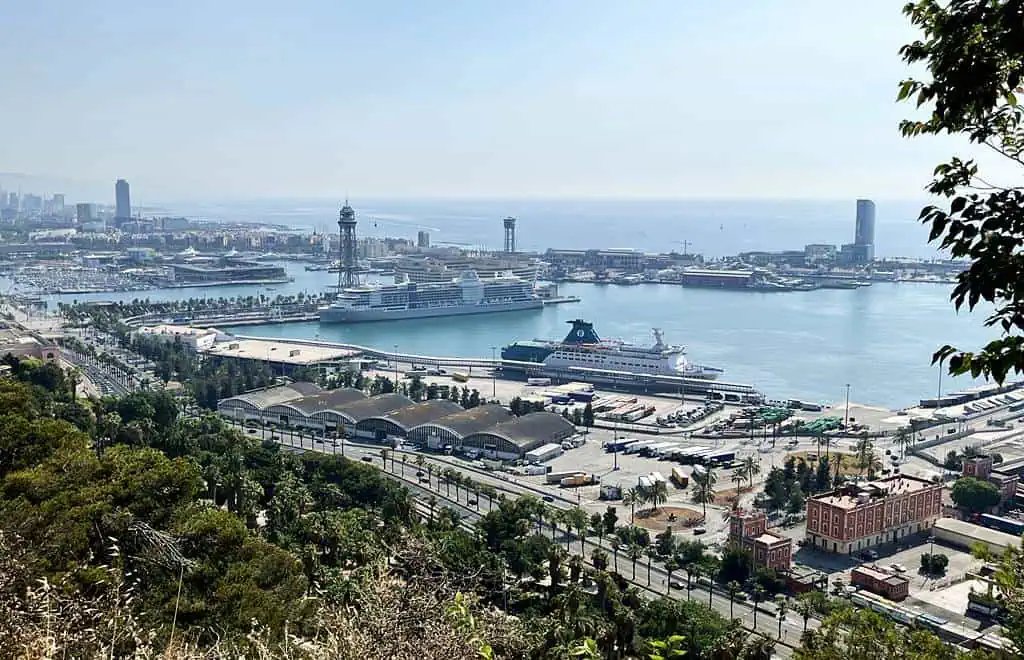
Ships dock at Port de Barcelona, with seven cruise terminals along the southern waterfront near the harbor entrance.
They’re split into two areas:
- Moll Adossat (Terminals A–D / Palacruceros)
- World Trade Center (WTC) (South, North, East)
Sant Bertran and Maremagnum are used for ferries, not cruise ships.

Quai Adossat Terminals (A-D)
Most large ships dock at Quai Adossat, around 3 km (1.8 miles) or a 10-minute drive from La Rambla, the city’s main street.

The area connects to the city via the Porta d’Europa bridge.
From the cruise terminals, you can reach the center in a few ways:
- Taxi – Fastest option, about 10–15 minutes to the Columbus Monument or the Gothic Quarter.
- Cruise shuttle bus (Portbus / Blue Bus) – Connects Moll Adossat terminals with the World Trade Center (WTC) near La Rambla, around €3 per person.
- Walking – Possible, but 2–3 km (30–45 minutes), so not very practical for most cruisers.

Facilities inside the terminal include:
- Duty-free and souvenir shops, cafes and bars
- Currency exchange, ATMs, and public phones
- Elevators, restrooms
- Taxi ranks and parking for tour buses
Since many cruises start or end here, the terminals support both embarkation and disembarkation.
World Trade Center Terminals (South, North, East)
Smaller ships dock at the World Trade Center terminals (WTC) at Moll de Barcelona, just a 10-minute walk from the Columbus Monument and La Rambla.
The terminals sit next to the World Trade Center complex, which houses shops, cafés, and public transport links.
Each terminal includes:
- A small tourist information desk
- Exchange office and souvenir shops
- Basic accessibility features
The cruise shuttle bus stops here, linking the Moll Adossat terminals with the WTC and the city center.
Prefer to watch instead?
Watch my FULL Barcelona Cruise Port Guide video on YouTube, where I cover the port, getting around the city, and the top things to do!
Can You Explore Barcelona on Your Own?
Yes — Barcelona is easy to explore independently.
The main sights are fairly close together, especially around the Gothic Quarter, La Rambla, and the waterfront.
Public transport is reliable, and taxis are easy to use.
If you plan to visit several landmarks in different areas, a guided tour can save time.
Otherwise, most cruisers can comfortably explore on their own, especially if you focus on the city center.
Getting Around from the Port
Public Transportation (Metro and Buses)
Barcelona has an efficient public transport network operated by TMB (Transports Metropolitans de Barcelona).
The closest metro station to the cruise port is Drassanes, located at the bottom of La Rambla, just a short walk from the WTC cruise terminals.
From Drassanes, the L3 metro line connects to many major attractions.
To reach Sagrada Família, switch to the L2 or L5 lines and get off at the Sagrada Família station.
If you plan to use public transport often, consider the Hola Barcelona Travel Card, which offers unlimited rides and starts at €18.10 for 2 days.
Taxis and Ride Apps
Taxis are widely available throughout Barcelona and are often the easiest way to travel between attractions during a short cruise stop.
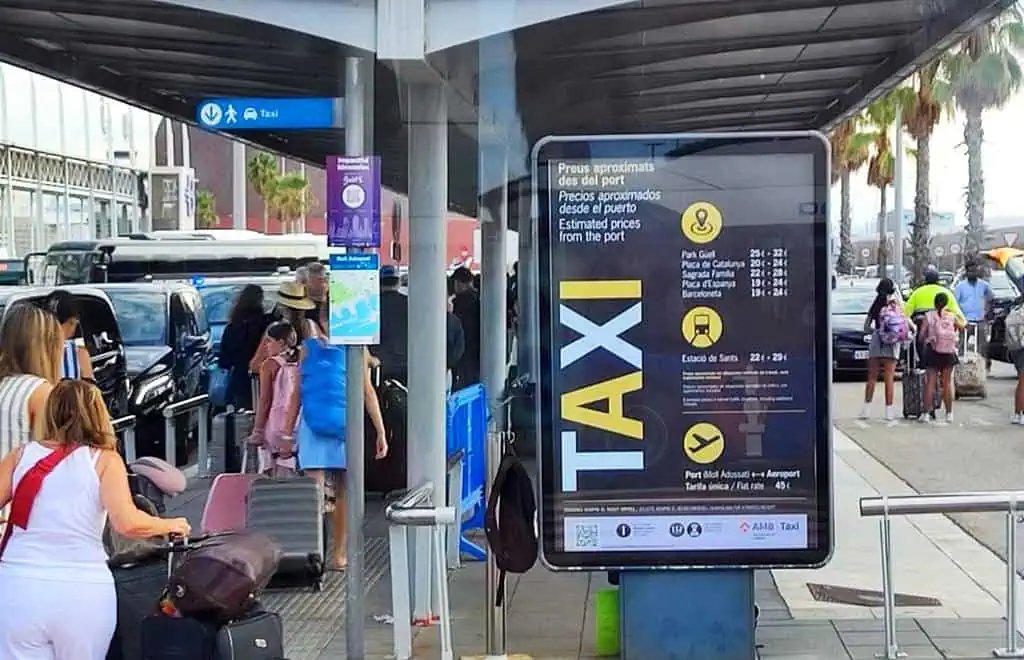
Several ride apps also operate in the city, including Uber, Free Now, Cabify, and Bolt.
Walking
Once you reach the Columbus Monument or La Rambla area, many of Barcelona’s historic neighborhoods are easy to explore on foot.
The Gothic Quarter, La Rambla, and parts of the waterfront are all within walking distance of each other.
Hop-On Hop-Off Sightseeing Bus
The hop-on hop-off bus is an easy way to see Barcelona’s highlights in one day.
It stops near the World Trade Center and covers major landmarks on three routes.

Shore Excursions from Barcelona
If you prefer a hassle-free way to explore Barcelona, shore excursions are a great choice.
👉 Browse shore excursions on Viator or GetYourGuide — trusted platforms widely used by cruisers
🛳️ Planning more Mediterranean ports?
Barcelona is just one of many amazing ports in the Mediterranean.
My Mediterranean Cruise Port Guide eBook covers 45+ ports with practical tips on getting around, walking routes, shore excursions, and what you can see and do during a cruise stop.
👉 Get the guide here


Getting from Barcelona Airport to the Cruise Port
Barcelona El Prat Airport is about 15 km from the city and the cruise port, with a travel time of 20–30 minutes.
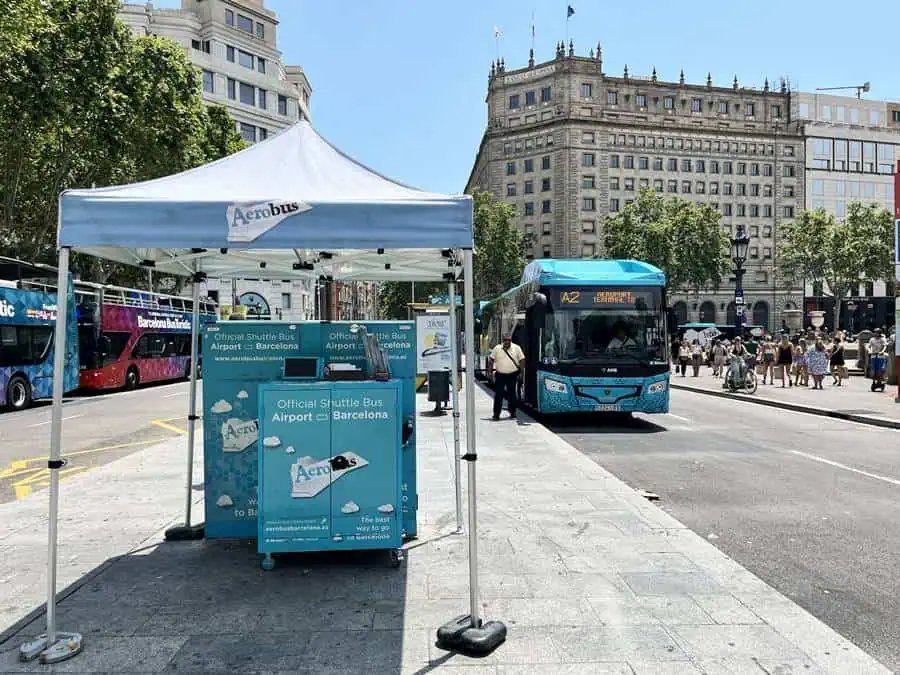
The Aerobus (airport bus) is the easiest option.
It runs to Plaça de Catalunya in about 35 minutes and costs €7.45.
Taxis cost around €45 to the port and are best if you have luggage or travel in a group.
The train is a cheaper option from Terminal 2 (with a free shuttle from T1), stopping at key stations in the city.
Private transfers are similar in price but more convenient.
If you’re going straight to the port or have luggage, take a taxi or transfer.
If you’re heading to a hotel, the Aerobus is an easy and cheaper option.
💡 Cruise tip: If you’re embarking on a cruise, especially from overseas, plan to arrive in Barcelona at least two days early to see the highlights of the city.
- Check out my guide on where to stay in Barcelona before a cruise for the best areas and hotels.
- See my Barcelona itinerary for 1–2 days for ideas on how to make the most of your time.
How Much Time You Need in Barcelona
Barcelona is a large city, so what you can realistically see depends on how long your cruise ship stays in port.
Short stop (4–5 hours)
Focus on the historic center. Most cruisers walk around the Gothic Quarter, stroll part of La Rambla, and visit the waterfront near the Columbus Monument.
Typical stop (7–9 hours)
This allows enough time to visit one major landmark, such as Sagrada Familia and still explore the old town or the harbor area.
Long stop (10+ hours)
With a full day in port, you can combine several major sights, such as Sagrada Familia, Park Güell, and the Gothic Quarter.
What to Do in Barcelona from a Cruise Ship
If it’s your first visit, these are the main things to do in Barcelona from a cruise port, starting with Sagrada Familia and a few key areas depending on your time.
Visit the Sagrada Família
Sagrada Família is the most famous landmark in Barcelona and one of the main reasons many visitors come to the city.

Designed by architect Antoni Gaudí, construction began in 1882 and the church is still unfinished today.
Gaudí spent the last decades of his life working on the project, and the building reflects his distinctive style inspired by nature and religious symbolism.
The interior is just as impressive as the exterior, with tall columns resembling trees and colorful stained-glass windows filling the space with light.

Most visitors spend about 1–1.5 hours here. Because entry times are limited, tickets often sell out on busy cruise days.
👉 Check Sagrada Familia guided tours and skip-the-line tickets
Explore the Gothic Quarter on Foot
The Gothic Quarter is the historic heart of Barcelona.
The neighborhood dates back to Roman times and developed during the Middle Ages.
Today, it is known for narrow pedestrian streets, hidden squares, and historic landmarks.
Highlights include:
- Barcelona Cathedral, a Gothic cathedral built between the 13th and 15th centuries
- Plaça del Rei, once the center of medieval royal power
- Plaça Sant Jaume, home to Barcelona’s city government


Because most streets are pedestrian-only, this area works very well for independent exploration.
Allow about 1–2 hours at a relaxed pace.
👉 Browse walking tours and local experiences
Walk Along La Rambla and Visit La Boqueria Market
La Rambla is the city’s most famous pedestrian street and connects the harbor with Plaça de Catalunya, the central square of Barcelona.

La Rambla developed during the 18th century along the route of the former medieval city walls.
Today, it is known for street performers, flower stalls, cafés, and historic buildings such as the Gran Teatre del Liceu opera house.


Halfway along the street, you’ll find La Boqueria, one of the oldest food markets in the city.
The market has operated here since the 19th century and is famous for its colorful displays of fruit, seafood, and local produce.


Many cruisers simply walk along La Rambla as part of their route between the port area and the historic center.
Allow 45–60 minutes to stroll the boulevard and explore the market.
👉 See market tours and food experiences
Visit Gaudí Architecture on Passeig de Gràcia
Casa Batlló and Casa Milà are two of Antoni Gaudí’s most famous residential buildings.
Both are located along Passeig de Gràcia, one of Barcelona’s main boulevards.
Casa Batlló, completed in 1906, is known for its colorful façade and organic shapes that resemble bones and waves.


Casa Milà (also known as La Pedrera), built a few years later, features a dramatic stone façade and a rooftop filled with unusual sculptural chimneys.

Many cruise excursions stop here briefly for photos, but visiting the interior requires separate tickets.
Because the two buildings sit only a short walk apart, they are often visited together.
Allow about 1–2 hours if you plan to go inside.
👉 Explore Casa Batlló and Casa Milà tours and tickets
Visit Park Güell for City Views
Park Güell is another famous Gaudí site located on a hill overlooking Barcelona.
Originally designed in the early 1900s as a residential garden city for entrepreneur Eusebi Güell, the project was never completed and later became a public park.
Today, it is known for colorful mosaic terraces, unusual stone structures, and panoramic views of the city.

Because Park Güell sits outside the city center, visiting requires taxi or metro travel.
Most visitors spend about 1–1.5 hours exploring the main terrace and viewpoints.
👉 Check tours and timed-entry tickets
Visit Montjuïc for Harbor Views
Montjuïc rises above the harbor just south of the city center.

The hill has long played an important role in Barcelona’s history and was used as a strategic military position.
Today, it is known for gardens, museums, and Montjuïc Castle, which overlooks the port.

One of the most popular ways to reach the top is the Telefèric de Montjuïc cable car, which runs from Montjuïc Park up to the castle and offers beautiful views over the harbor during the ride.

The area is easiest to reach by taxi, guided tour, or by taking the funicular from Paral·lel metro station before continuing by cable car.
Allow about 1–2 hours if visiting the main viewpoints.
👉 Browse Montjuïc tours and cable car tickets
Relax at Barceloneta Beach
Barceloneta Beach is the closest beach to the cruise port and a popular place to relax for a few hours.

The beach was developed in the late 20th century as part of Barcelona’s waterfront transformation before the 1992 Olympic Games.
Today, it is known for its long sandy promenade and lively atmosphere.
Many cruisers stop here after exploring the city center, especially on warm Mediterranean cruise days.
Allow 1–2 hours if you want to relax by the water.
Should You Book a Shore Excursion in Barcelona?
Barcelona is easy to explore independently, with major sights close together and simple transport from the port.
Shore excursions can be useful if you want a guided overview or guaranteed entry to places like Sagrada Família.
Otherwise, most cruisers can explore on their own with a bit of planning and by using taxis, the metro, or the port shuttle.
Practical Tips for Cruise Visitors
- Currency is Euro; cards are widely accepted
- Cruise terminals are 2–3 km from the center — use Portbus or taxi
- Book Sagrada Família and Park Güell tickets in advance
- Watch for pickpockets in busy areas like La Rambla and metro stations
- Wear comfortable shoes (uneven streets, some uphill)
- Leave extra time to return to the ship, especially in the afternoon
Is It Worth Staying in Barcelona?
Yes — Barcelona is one of the few cruise ports where staying in the city itself is absolutely worthwhile.
Even during a short stop, visitors can explore the historic center, see Gaudí’s famous architecture, and enjoy the waterfront.
The main sights are spread across several neighborhoods, but they are easy to reach by taxi or metro.
If your cruise begins or ends in Barcelona, spending at least one or two nights in the city allows for a much more relaxed experience.
FAQ
❓ Is Barcelona cruise port walkable?
Most cruise ships dock at the Moll Adossat terminals, which are about 2–3 km from the city center, so most cruisers take the Portbus shuttle or a taxi to reach La Rambla and the historic center.
❓ Do cruise ships tender in Barcelona?
No. Cruise ships dock directly at the Port of Barcelona terminals, so tender boats are not used.
❓ How far is Barcelona cruise port from La Rambla?
The cruise terminals are about 2–3 km from La Rambla, which usually takes 10–15 minutes by taxi or shuttle bus.
❓ Can you visit Sagrada Familia from a cruise ship?
Yes. Many cruise passengers visit Sagrada Família during their stop in Barcelona. It’s best to book tickets in advance, especially on busy cruise days.
❓ Is Barcelona safe for cruise visitors?
Barcelona is generally safe, but pickpocketing can occur in crowded tourist areas such as La Rambla, metro stations, and popular landmarks.
Helpful Resources
- Port of Barcelona cruise terminals and passenger information — terminals, port services, and cruise operations.
- Barcelona public transport journey planner — check metro, bus, and tram routes
- Sagrada Família official ticket website — check entry times and book tickets in advance
- Barcelona tourism information — information about attractions, city districts, and visitor services.
Ports Often Included with Barcelona
Barcelona is one of the main departure ports for Western Mediterranean cruises.
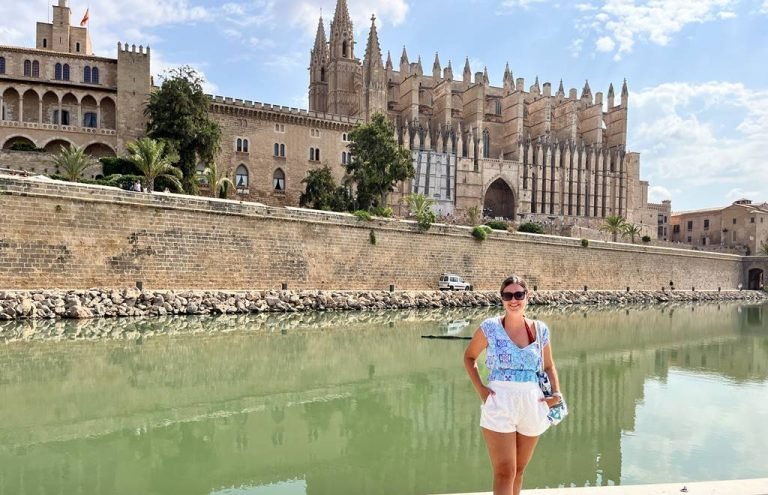
- Palma de Mallorca — a popular Balearic island stop with a historic cathedral, old town, and beaches.
- Marseille — a major French port and gateway to Provence and Aix-en-Provence.
- Naples — a busy Italian port for visiting Pompeii, Mount Vesuvius, or the Amalfi Coast.
- Rome (Civitavecchia) — the main port for Rome and a common stop with Barcelona.
- Florence (Livorno) — port for inland trips to Florence or Pisa.
Planning more cruises? You can browse all my regional cruise port guides here: Mediterranean • Caribbean • Northern Europe • USA & Canada • Australia & New Zealand • Middle East

“Fantastic guide! This blog brilliantly captures the essence of Barcelona’s cruise port, making it easy to plan an unforgettable adventure in this vibrant city.”