Cartagena Colombia Cruise Port Guide: 7 Best Things To Do
Some links in this post are affiliate links. If you book through them, I may earn a small commission at no extra cost to you. Thanks for supporting my work!
As an Amazon Associate, I earn from qualifying purchases. Read my full disclosure here.
Cartagena sits on Colombia’s northern coast and is one of the busiest cruise ports in this part of the Caribbean.
Founded in 1533, the city spent centuries defending itself from pirates and rival empires, and you can still feel that history in its stone walls, forts, and colorful colonial streets.
Ships dock at the Port of Cartagena, about 5 km (3 miles) from the Old Town. The port is industrial, but the cruise terminal is surprisingly charming, with tropical gardens and free-roaming animals greeting you as you walk out to meet your tour or taxi.
Most visitors head straight for the UNESCO-listed Old Town — a lively maze of balconies, flowers, cafés, and plazas. It’s the heart of Cartagena and the highlight of almost every cruise stop.
In this Cartagena cruise port guide, I share what to expect when you arrive and the best things to do during your stop, whether you’re interested in history, a relaxed beach break, or a simple, easy half-day visit.
Cartagena Cruise Port Overview
Cartagena’s cruise terminal sits in the industrial Manga district, about a 20-minute drive from the UNESCO-listed Old Town.
Ships dock at two dedicated piers, and depending on traffic and vessel size, additional berths may be used during busy days.

The piers are roughly 500 meters from the terminal building, and port staff usually run free shuttle buses to move passengers between the ship and the main cruise village.
This area is one of the prettiest cruise terminals in the Caribbean — you walk through lush tropical gardens, small waterfalls, ponds, flamingos, peacocks, and shaded paths before reaching the building.
Inside the terminal complex, you’ll find coffee shops, free Wi-Fi, snack bars, restrooms, and plenty of seating.
The large indoor market offers a wide selection of local handicrafts, clothing, jewelry, artwork, leather goods, and Colombian coffee. Every cruiser must pass through this building to exit the port.
Before you reach the transportation area, you also walk through a small aviary filled with colorful macaws — great for photos.
Getting Around Cartagena
🚕 Taxis & Ride Options
Right outside the cruise terminal, you’ll see a clearly marked taxi rank with official fixed prices. Rates are per taxi, not per person, and you can pay in USD or COP. Typical prices (2024–2025) are:
- $20–25 USD one-way to the Old Town
- About $30 USD for a 1-hour city tour
Drivers may negotiate slightly, and many cruisers share taxis since most people head to the same area.
Drop-off is usually near Teatro Colón, just a short walk from the Clock Tower (Torre del Reloj) and the entrance to the Old Town.
🚶♀️ Walking (Not Recommended to/from Port)
You can walk from the port to the city center, but it takes around 45 minutes along busy, unshaded roads, so it’s not recommended. A taxi or guided tour is a much safer and more comfortable option.
Once you’re inside the Old Town, however, everything is close together and best explored on foot. The narrow streets, plazas, and colorful colonial buildings are easiest to enjoy at a relaxed walking pace.
🚌 Shore Excursions
If you prefer something structured, you’ll find plenty of shore excursions that cover Cartagena’s highlights, from the Old Town and Getsemaní to San Felipe Fortress and nearby beaches.
All organized tours meet just outside the cruise terminal.
👉 Check Cartagena tours on Viator and GetYourGuide (trusted platforms)
Practical Tips for Cruisers
- Bring small bills if paying in cash — USD is widely accepted.
- Expect heat and humidity; the gardens offer shade, but Cartagena gets hot quickly.
- Wi-Fi is available inside the terminal, but it can be slow on busy days.
- Plan your return early, especially if visiting on a multi-ship day, as traffic near the port can get congested.
- The terminal is great for last-minute souvenirs, especially coffee and local crafts.
📘 Planning a Caribbean Cruise?
Plan your trip with my Caribbean Cruise Port Guide, an all-in-one resource covering 40 ports across the region.
Inside, you’ll find detailed port insights, practical tips for getting around, and the top things to do at every destination — all in one easy guide.


7 Best Things To Do in Cartagena Cruise Port
With limited time ashore, it helps to know what’s worth prioritizing. Here are the top things to do in Cartagena that fit perfectly into a cruise day.
1. Explore Cartagena’s Old Town (Walled City)
Cartagena’s Old Town is the highlight of any cruise visit — a UNESCO-listed maze of colorful streets, lively plazas, colonial buildings, and waterfront views.
Everything is close together, so it’s easy to explore on foot. Here are the main places you’ll pass on a typical walking route:
Walled City of Cartagena
Start at the Walled City (Ciudad Amurallada), built in the 16th century to protect Cartagena from pirates.
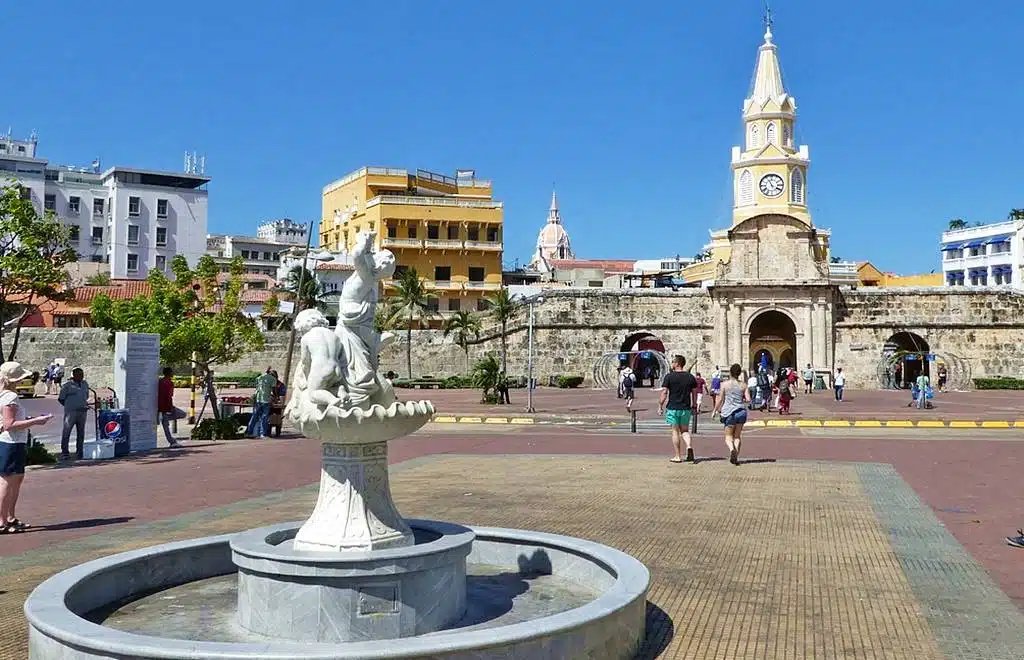
Most visitors enter through the Clock Tower Gate (Torre del Reloj), the iconic yellow tower that marks the main entrance.
From the top of the walls, you get panoramic views of the sea and the Old Town — a great photo spot.
Plaza de los Coches
Just inside the gate, Plaza de los Coches sets the tone with its colorful arches and lively atmosphere.
Vendors sell local sweets, and at the center stands the statue of Pedro de Heredia, Cartagena’s founder. It’s one of the busiest squares in the Walled City.

Cartagena Cathedral
A short walk away is the Cartagena Cathedral (Catedral de Santa Catalina), one of the oldest churches in South America.
Its soft yellow façade and bell tower make it one of the city’s most photographed landmarks.

Museum of Cartagena de Indias
If you want a deeper look into Cartagena’s past, visit the Museum of Cartagena de Indias, located in the former Palace of the Inquisition.
Exhibits cover everything from pre-Columbian history to the Inquisition period and the city’s role in the Spanish Empire.
Plaza Santo Domingo
This lively square is filled with cafés, restaurants, and music. The main attraction is Botero’s “La Gorda Gertrudis”, a popular photo stop.
It’s a great place to sit down, cool off, and people-watch.
Las Bóvedas
At the edge of the Old Town, Las Bóvedas is a row of old vaults built into the city walls, once used as storage and later as dungeons.
Today, they’re home to small artisan shops selling ceramics, textiles, jewelry, and other Colombian crafts. It’s a good spot for souvenirs.
Santuario de San Pedro Claver
Dedicated to Saint Peter Claver, known for his work supporting enslaved Africans during the colonial era, this church and monastery is one of the most meaningful places in Old Town.
The baroque interior, courtyard, and museum make it worth a short visit.
🗺️ Explore Cartagena’s Old Town with a Local Guide
Seeing the Old Town with a local guide is the best way to understand its history, hidden corners, and stories you might miss on your own. These tours are perfect for cruisers with limited time in port.
2. Visit Castillo San Felipe de Barajas
Castillo San Felipe de Barajas is one of Cartagena’s most famous landmarks and a highlight for many cruisers.
Built in 1536 to defend the city from pirates and rival empires, it remains the largest Spanish fortress ever constructed in the Americas.

Set on the Hill of San Lázaro, about a 15-minute drive from the cruise port, the fort offers sweeping views over Cartagena and the Caribbean.
The site is huge, with sloping ramps, lookout points, and a maze of tunnels that show how strategic and heavily protected the city once was.
A guided visit is especially worthwhile here, as the stories behind the battles, engineering tricks, and hidden tunnels make the experience far more interesting.
3. Wander Through Barrio Getsemaní
If you want to experience a different side of Cartagena, head to Barrio Getsemaní, just outside the Old Town walls.
Once a working-class neighborhood, it has grown into a creative district filled with murals, small cafés, street art, and a relaxed local vibe.

The heart of the area is Plaza de la Trinidad, where you’ll often find live music, performances, and food vendors in the evenings.
Despite its popularity, Getsemaní still feels authentic, with narrow streets, colorful houses, and a strong sense of community.
It’s one of the best places to wander, take photos, and see Cartagena beyond the traditional tourist spots.
4. Enjoy the Views from Convento de la Popa (La Popa Monastery)
Perched on the highest hill in Cartagena, Convento de la Popa offers some of the best panoramic views of the city and the Caribbean Sea.
Founded in 1607, the monastery feels peaceful compared to the busy streets below, and its hilltop shape inspired the name “La Popa,” meaning the stern of a ship.

Inside, you’ll find a charming flower-filled courtyard and a small chapel dedicated to Our Lady of La Candelaria, Cartagena’s patron saint.
The visit is straightforward and doesn’t take long, making it an easy addition to a cruise-day itinerary.
There’s a small shop selling rosaries, local honey, and cold water — helpful if you’re visiting on a hot day. Many shore excursions include La Popa because of the views alone.
5. Relax at Bocagrande Beaches (Best Urban Beach Option for Cruisers)
If you’re looking for a quick beach break without leaving the city, Bocagrande Beaches are your best option.
Located about 10–15 minutes from the cruise port, this modern beachfront district offers long stretches of sand, calm swimming areas, and plenty of beach clubs where you can rent chairs and umbrellas.
Bocagrande is popular with cruisers because it’s close, easy to reach by taxi, and doesn’t require a full-day trip like the Rosario Islands.
It’s a relaxed spot to enjoy the sun, try local snacks, or simply cool off in the water before heading back to explore the Old Town.
6. Take a Day Trip to the Rosario Islands
If you have extra time in port or prefer a full-day beach escape, the Rosario Islands offer some of the most beautiful waters near Cartagena.
This archipelago of 27 islands is part of the Rosario and San Bernardo Corals National Park, known for its clear turquoise sea, coral reefs, and excellent snorkeling.

Most visitors join an organized day trip, which includes boat transportation, lunch, and snorkeling equipment.
The boat ride from Cartagena takes about 45–60 minutes, and tours typically run from morning to mid-afternoon, perfect for cruisers with a full day in port, but not ideal for shorter stops.
It’s a great option if you want time on a quieter beach and a taste of Colombia’s Caribbean islands beyond the city.
7. Visit the San Pedro Claver Museum & Church
If you want to learn more about Cartagena’s religious and cultural history, the San Pedro Claver Museum & Church is worth a dedicated stop.
The complex is named after Saint Peter Claver, a Jesuit priest remembered for his humanitarian work supporting enslaved Africans who arrived in Cartagena during the colonial era.
The museum sits beside the church and includes peaceful courtyards, religious art, artifacts, and exhibits that explain the city’s complex past.
Even if you’ve visited the church while exploring the Old Town, the museum adds context and is easy to include in a short walking itinerary.
👉 Check out San Pedro Claver Museum tours
Wrap-Up
Cartagena is one of the most rewarding cruise ports in the Caribbean, whether you spend your day wandering the Old Town, exploring historic fortresses, or relaxing on a nearby beach.
Most of the top sights are close together and easy to visit in a single day, making it a great port for both DIY exploring and guided tours.
FAQ About the Cartagena Colombia Cruise Port
❓ Is Cartagena safe for cruise passengers?
Cartagena’s tourist areas, especially the Old Town and Getsemaní, are generally safe during the day. Stay in well-visited areas, use official taxis, and keep valuables secure.
❓ How far is the Cartagena cruise port from the Old Town?
The Old Town is about 5 km (3 miles) from the port, usually a 20-minute taxi ride depending on traffic.
❓ Are taxis easy to find at the cruise port?
Yes. The terminal has a taxi rank with fixed prices, and you can pay in USD or COP. Sharing taxis is common among cruisers.
❓ Can you walk from the port to Cartagena’s Old Town?
It’s possible but not recommended. The walk takes around 45 minutes along busy, unshaded roads. A taxi or guided tour is much easier.
❓ Do I need Colombian pesos for a cruise visit?
Not necessarily. Most tourist areas accept USD, though having a few pesos can be helpful for small purchases.
❓ What are the closest beaches to the cruise port?
Bocagrande Beaches are the nearest option, about 10–15 minutes by taxi. For a full-day beach trip, cruisers often choose the Rosario Islands.
❓ Do I need a tour to explore Cartagena?
The Old Town is walkable on your own, but guided tours can help you understand the history and make the most of limited time in port.
Helpful Resources for Cartagena Cruise Port
🌐 Useful Websites
- Find Cartagena Cruise Port on Google Maps
- Cartagena Cruise Ship Schedule
- Official Tourism Website
- Local Weather Forecast
- Cartagena Port Authority
🛳️ Ports Often Included on Cartagena Cruise Itineraries
Cartagena is commonly included on Panama Canal or Southern Caribbean itineraries. Here are other ports you may visit on the same cruise:
- Colón (Panama) – gateway to the Panama Canal
- Aruba – white-sand beaches and Dutch Caribbean charm
- Curaçao – colorful Willemstad and great snorkeling
- Bonaire – top-rated reefs and easy shore diving
- San Juan (Puerto Rico) – forts, old streets, and rich history
- Grand Cayman – Seven Mile Beach and Stingray City
If your cruise departs from South Florida, check out our guides to the best hotels near Miami Cruise Port and top hotels near Fort Lauderdale Cruise Port to plan a smooth start or finish to your trip.
You may also like our cruise port guides to the Mediterranean, Caribbean, Northern Europe, USA & Canada, Middle East, Australia & New Zealand
Adventour Begins contains affiliate links. If you make a purchase through these links, we may earn a commission at no additional cost to you. For more details, please see our Disclosure Policy.